Scene and safety
Emergency care first; then photos, exchanges, the report number.
Soft-tissue injuries from San Diego crashes — freeway merges, intersection impacts, rear-ends on the 5 — follow delayed-onset patterns that work against good documentation. This desk explains the injury, the timeline, and the record that should come with it. No invented numbers, no advice dressed as information.
Medical emergency? Call 911. This site does not diagnose injuries.
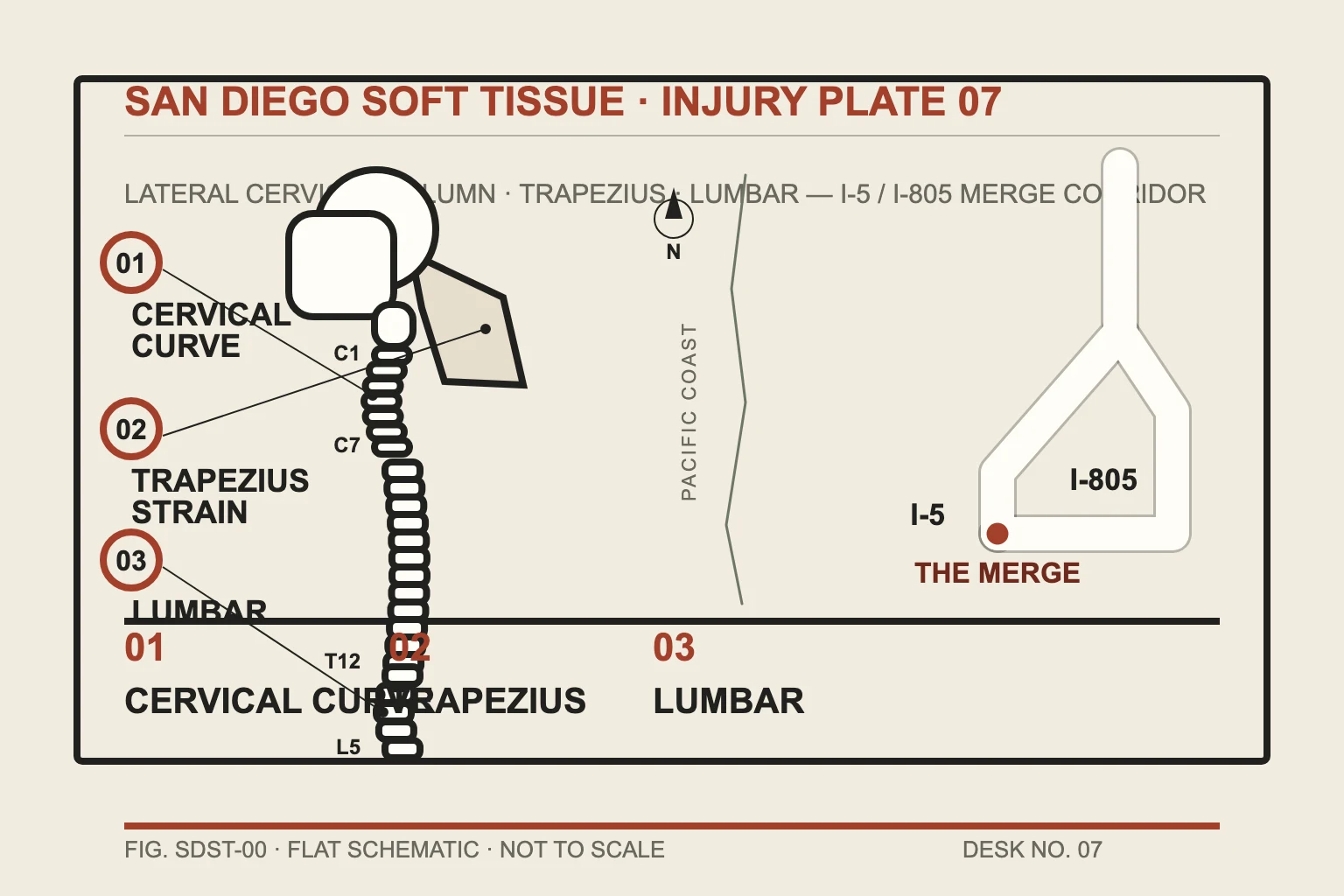
Cervical curve
02Trapezius strain
03Lumbar
Each carries its source. Every topic file expands on these.
Pain and stiffness after a collision commonly peak 24–72 hours later. The tissue response declares itself over days — a defining feature of whiplash-associated disorders (Quebec Task Force, Spine 1995).
The first exam, the photos, the symptom log — documentation begins the day of the crash, not the day the pain peaks (Vehicle Code §20008).
A personal-injury lawsuit must generally be filed within two years of the injury under Code of Civil Procedure §335.1.
Post-SB 1107 minimums: $30,000 per person, $60,000 per accident, $15,000 property damage — for policies issued or renewed on or after January 1, 2025 (Insurance Code §11580.1b).
Pain and stiffness after a collision commonly peak 24–72 hours later.Quebec Task Force on Whiplash-Associated Disorders, Spine 1995
An injury claim is built from records made at the time, not from memories reconstructed later — and delayed onset makes contemporaneous records the load-bearing wall.
Start the injury file →Emergency care first; then photos, exchanges, the report number.
The inflammatory response declares itself — the symptom log bridges the gap.
Written report to the DMV where injury, death, or qualifying damage occurred.
Code of Civil Procedure §335.1 — the record must be ready long before.
California generally uses a two-year period for personal-injury lawsuits (Code of Civil Procedure §335.1), but shorter rules apply elsewhere in the file — the SR-1 report, for example, is due within 10 days (Vehicle Code §20008), and delayed onset means the record should start on day one. Get fact-specific advice early.
Read the claims file →Every file distinguishes medical information from California legal and insurance guidance. The desk grounds itself in the statutes (leginfo), DMV guidance, and peer-reviewed or professional-association sources (Quebec Task Force, AAOS, MedlinePlus) — so readers can move from a plain-language explanation to the underlying authority.